Five Tickets, No Parlays: A December Underdog Board for Casual Bettors
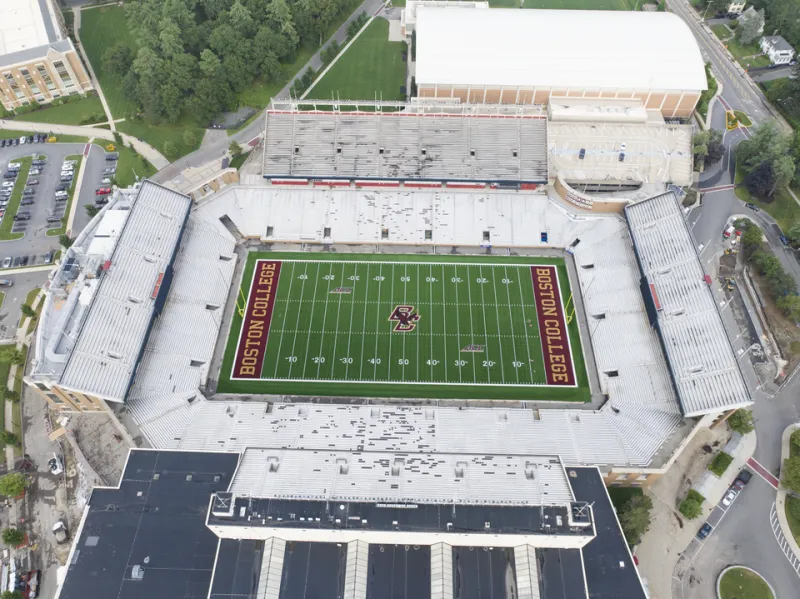
Photo: Quintinsoloviev, CC BY-SA 4.0, via Wikimedia Commons
December is where casual betting cards go to die. Bowl season gives you a dozen games a day, the NFL schedule gets weird, and every group chat has someone holding a 12-leg lottery ticket that needs one more miracle. The Bemin 114 answer is not a bigger card. It is a smaller one.
This is a December 2026 underdog board with four standard profiles and one labeled chaos pick. It is built for recreational players who want a short card they can actually read, not a pile of legs they will forget by halftime.
The board rules
Before any picks, the rules matter more than the teams.
- Five tickets maximum. Four standard underdog plays and one chaos play. That is the whole board.
- One unit per standard play. The chaos pick gets a quarter-unit, max. If your unit is $5, the chaos ticket is $1.25. If that feels too small, the chaos ticket is too big.
- No parlays, no teasers, no same-game parlays. This is the spine of the whole article. More on why below.
- Shop the line. Odds move, and a half-point or a better price is free money in a close game. Do not take the first number you see out of habit.
- Pass if the injury report is murky. A questionable quarterback or a surprise opt-out can turn a good underdog profile into a bad guess. There is no award for betting every game.
The four standard underdog profiles
College bowl matchups and NFL lines will firm up as December gets closer. These are the four profiles to hunt for when the board fills out.
1. The bowl dog with quarterback continuity
The best bowl underdog is often the team that has its quarterback room intact while the favorite is dealing with a transfer, an opt-out, or a new starter taking his first real snaps. Bowl season is strange. Motivation is hard to measure, but continuity is easier to see.
Look for an underdog with a healthy starting quarterback who has started most of the season. Then check the favorite. If the favorite is breaking in a backup or losing key skill players, the points start to look interesting. Take the spread first. A small moneyline is fine only if the price makes sense.
Pass if the underdog is also dealing with coaching turnover or multiple opt-outs. Continuity only helps when it is actually on your side.
2. The Group of Five bowl dog with something to prove
This is the classic December underdog profile: a Group of Five team that has been discounted all season, draws a bigger-name opponent, and gets a chip-on-the-shoulder matchup. The market often overprices the brand and underprices the team that has been winning with a stable run game and a defense that does not give away free yards.
Check the rushing numbers, third-down defense, and turnover margin. Then check the favorite's motivation. If the bigger-name team has a lame-duck coach, a shaky quarterback situation, or a roster missing key pieces, the underdog is live.
Pass if the Group of Five team is down its own coach or has a history of getting blown out against power-conference lines. The profile is not automatic.
3. The late-season NFL home dog in a divisional game
December NFL divisional games are usually tighter than the standings suggest. A home underdog with something to play for — a wild-card spot, a division tiebreaker, or simple pride — can be a useful ticket when the public is loading up on the better record.
Look for a low total, a home dog that runs the ball well, and a favorite that has been living on close wins. Division familiarity cuts both ways, but it often keeps the game in a one-score range. Taking the points is the starting point. A small moneyline is a bonus, not the plan.
Pass if the home dog is starting a backup quarterback against a defense that pressures well. December weather can help an underdog, but it cannot fix a broken passing game.
4. The December NFL road dog with a rest edge
This one is less romantic but often more logical. A road underdog coming off a mini-bye or a Thursday game can have a real rest advantage over a favorite that played a physical game the previous Sunday. The market sometimes prices the favorite on reputation and ignores the short week.
Check snap counts and injury reports. If the favorite is banged up on the offensive line or secondary, and the underdog has had extra time to prepare, the points are worth a look. This profile works best when the underdog can run the ball and keep the favorite's offense off the field.
Pass if the road dog is on a short week itself or has nothing left to play for. Rest is only an edge when the team is healthy enough to use it.
The chaos pick: label it, cap it, do not marry it
The chaos pick is the one ticket on the board that is allowed to be a little silly. It should be the biggest moneyline underdog that fits a real angle — bad weather, a turnover-prone favorite, a backup quarterback, or a bowl team that looks uninterested.
But here is the rule: the chaos pick gets a quarter-unit, and it does not get promoted. It is not the anchor of the card. It is not the ticket you post in the group chat with fire emojis. It is a small, labeled lottery ticket that you fully expect to lose. If it wins, great. If it loses, the card is still intact.
That labeling matters. When a chaos pick is mixed in with your serious plays, it starts to feel like a cornerstone. It is not. It is entertainment with a hard cap.
Why the no-parlay rule stays
Parlays are popular because they turn a bunch of small opinions into one big number. That is also the problem. A four-leg parlay at plus-900 looks like a plan, but it is really one ticket that needs four separate things to go right. If one leg loses, the whole card is gone.
The no-parlay rule keeps the December board readable. You can review four standard plays and one chaos ticket. You can see which profiles worked and which ones were just bad ideas. You cannot review a 12-leg ticket that died because a backup kicker missed a 48-yarder in the fourth quarter.
If you like two underdogs, bet them separately. If you like all five, bet them separately at the capped stakes. The card should be a short list, not a puzzle.
How the card looks on paper
| Ticket | Play type | Stake | What has to be true |
|---|---|---|---|
| 1 | Bowl dog with QB continuity | 1 unit | Underdog has the healthier, more experienced quarterback |
| 2 | Group of Five bowl dog | 1 unit | Favorite is overpriced by brand and missing key pieces |
| 3 | NFL home dog, divisional | 1 unit | Low total and a favorite that has been living close |
| 4 | NFL road dog with rest edge | 1 unit | Underdog is healthier and has extra prep time |
| 5 | Chaos moneyline | 0.25 unit | Weather, turnovers, or a backup QB creates a real long-shot angle |
Total risk: 4.25 units. If your bankroll is $200 and your unit is $5, that is $21.25 on the card. That is a recreational number. It should feel small enough that a bad Sunday does not ruin your week.
The review after the bowls
Write down the line, the reason, and the result for every ticket. After the bowl season and the final NFL Sundays, look at the board. Did the profiles make sense? Did the chaos pick stay small? Did you avoid the parlay trap?
The goal is not to go five for five. The goal is to build a December card you can understand, afford, and review without needing a magnifying glass. Four underdogs, one chaos ticket, and no parlays. That is a board that stays fun.