How Far Does a Twenty Go? Seven Casino Games Ranked by Staying Power
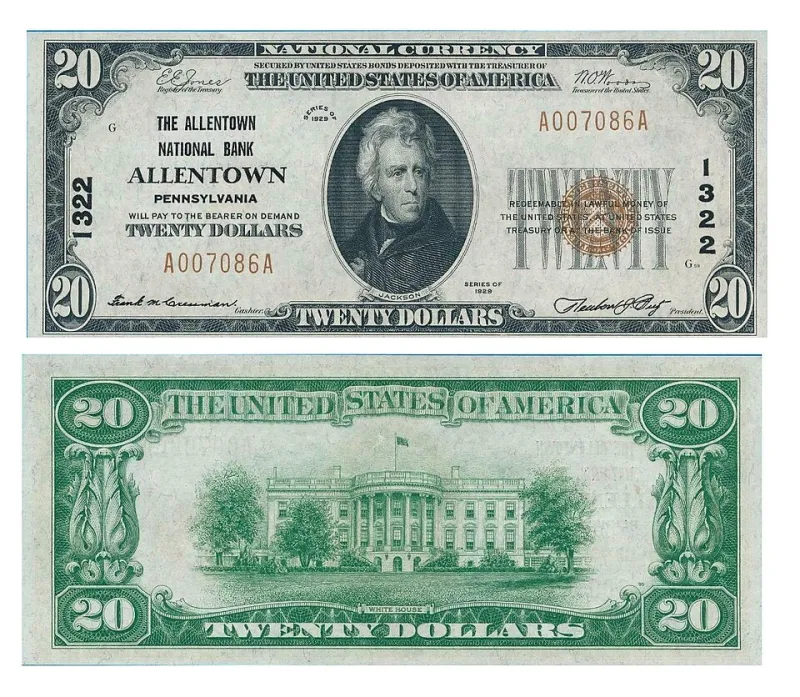
Photo: United States Treasury Department, Public domain, via Wikimedia Commons
A $20 bill is the classic casual casino bankroll. It is enough to be interesting, small enough to walk away from, and honest enough to force a choice: do you want a long, low-stress session, or a short shot at something memorable? The answer changes a lot depending on the game.
This ranking estimates how long $20 lasts at low stakes in seven common casino games. These are rough ranges, not promises. Variance is real, pay tables vary by state and casino, and one hot slot can outlast a boring blackjack table. The point is to compare the math before you sit down.
The assumptions behind the math
Every estimate uses the same $20 starting bankroll and no reloads. Low stakes are defined as $0.20–$0.25 slot spins, $1–$2 blackjack hands, $1 outside roulette bets, a $1 craps pass line bet, $1 baccarat bets, $1.25 video poker hands (five credits at 25 cents), and $1–$2 keno tickets.
Pace matters too. The estimates assume about 500–600 slot spins per hour, 60 blackjack hands per hour, 30 roulette spins per hour, 30 craps rolls per hour, 40 baccarat hands per hour, 40 video poker hands per hour, and 10 keno draws per hour. House edges are typical for US casual play: 8–10% on slots, about 0.5% on blackjack with basic strategy, 5.26% on double-zero roulette, 1.41% on the craps pass line, 1.06% on baccarat banker, 0.46% on 9/6 Jacks or Better video poker, and 25–30% on keno.
Expected hourly loss is coin-in multiplied by house edge. Then the playtime estimate gets a haircut for variance, because a $20 bankroll can bust before the expected-loss math says it should. Think of the ranges as typical outcomes, not guarantees.
1. Video poker — roughly 2 to 4 hours
A $1.25 hand at 40 hands per hour puts about $50 through the machine each hour. At a 0.46% edge on a full-pay Jacks or Better table, expected loss is only about 23 cents per hour. That sounds like forever, and on a good pay table it can feel that way. The catch is that full-pay tables are not everywhere, and players who chase royals without basic strategy give back more than the math suggests. Still, for a patient player who knows the game, video poker is the best staying-power bet on this list.
2. Blackjack — roughly 2 to 4 hours
At $1–$2 hands and 60 hands per hour, you are cycling $60–$120 per hour. With basic strategy and a 0.5% edge, expected loss is about 30–60 cents per hour. The range is wide because table minimums and rules vary. A $5 minimum table will eat a $20 bankroll much faster than a $1 table, and 6:5 blackjack payouts are worse than the classic 3:2. If you can find a low minimum and play reasonably, blackjack is one of the slowest burns in the building.
3. Baccarat — roughly 1.5 to 3 hours
A $1 banker bet at 40 hands per hour moves about $40 per hour, and the 1.06% house edge on banker produces an expected loss of roughly 42 cents per hour. The game is fast and simple, which is both the appeal and the risk. If you start pressing bets after a few losses, the estimate goes out the window. Play flat and small, and $20 can cover a relaxed session.
4. Craps — roughly 1 to 2.5 hours
A $1 pass line bet with 30 rolls per hour is about $30 of coin-in per hour. The 1.41% edge on the pass line gives an expected loss near 42 cents per hour. Craps feels faster than that because of the social energy and the come-out rolls, and adding odds or proposition bets changes the math. Stick to the pass line and avoid the center of the table if you want the $20 to last.
5. Roulette — roughly 1 to 2 hours
A $1 outside bet on a double-zero wheel at 30 spins per hour is $30 of coin-in per hour. The 5.26% house edge produces an expected loss of about $1.58 per hour. That is a noticeable step up from blackjack or baccarat. Single-zero wheels are better if you can find them, but many US casinos run double-zero tables. The slow pace helps, but the edge catches up.
6. Keno — roughly 45 to 90 minutes
Keno is the wild card. A $1–$2 ticket per draw at 10 draws per hour moves $10–$20 per hour, and the house edge is often 25–30%. Expected loss can run $2.50–$6 per hour, but the real story is variance: most tickets lose entirely, and the occasional small hit feels like progress. A $20 bankroll can disappear in a dozen quiet draws or last through a lucky streak. It is a lottery-style game, so treat the time estimate loosely.
7. Slots — roughly 30 to 90 minutes
A $0.25 spin at 500–600 spins per hour is $125–$150 of coin-in per hour. At an 8–10% hold, expected loss is $10–$15 per hour. That is the fastest expected burn on the list. Slots make up for it with volatility: a $20 bankroll can vanish in 20 minutes on a cold machine, or a bonus round can stretch the session for hours. Penny slots at $0.20 per spin last longer than dollar slots, but the house edge is still working against you.
What this means for your $20
If you want the longest low-stress session, video poker and low-limit blackjack are the math-friendly picks. If you want a social hour with a drink, craps and baccarat are reasonable. If you want a short burst of entertainment and you are fine with a fast finish, slots and keno deliver exactly that.
The bigger bankroll lesson is that game choice matters as much as bet size. A $20 bill at a $5 blackjack table is not the same as a $20 bill at a $1 table. Read the minimums, check the pay tables, and decide before you sit down whether you are buying time or buying a shot. Both are valid. Just know which one you picked.